What is UPVC casement window?
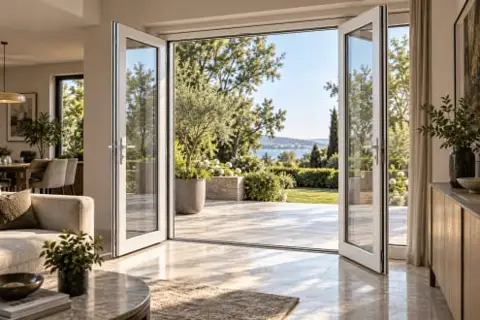
UPVC casement window is hinged windows where the sash opens outward or inward from one side. They are commonly used where ventilation, daylight and practical openable access are required.
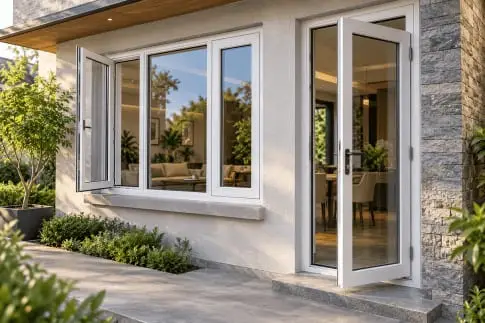
UPVC Solutions
UPVC Casement Windows
UPVC casement windows provide a practical openable window solution for homes, apartments, offices and other architectural spaces. Designed around side-hinged operation, they support ventilation, daylight and easy access for cleaning. Deltra Global provides uPVC window solutions with suitable glazing, finishes and configurations based on the requirements of each project.
UPVC casement windows are side-hinged windows that open outward or inward, depending on the selected configuration. Unlike sliding windows, the sash moves away from the frame to create an openable area for ventilation and access.
For residential and commercial projects, this configuration can be considered where controlled ventilation, natural light and an easy-to-operate window are important. The clean profile of uPVC also works across contemporary and conventional architectural styles.
Deltra Global provides uPVC window solutions for residential, commercial and architectural projects, with product selection based on opening dimensions, configuration, glazing, finish and project requirements.
A casement window operates through hinges positioned along one side of the sash. When opened, the sash swings away from the frame rather than moving horizontally along a track.
This makes the configuration particularly useful where the design requires an openable window with direct ventilation. The available opening direction, hardware and overall configuration should be selected according to the room layout and approved system.
For larger openings or specific architectural requirements, the number and arrangement of openable and fixed sections can also be planned based on the selected system.
UPVC casement windows can be considered for a variety of residential and commercial spaces.
Suitable for bedrooms, living rooms, studies, kitchens and other areas where natural ventilation and daylight are required.
Casement configurations can complement larger residential elevations while providing practical ventilation and a clean architectural appearance.
They can be used in office rooms and other commercial areas where an openable window is required as part of the building design.
Depending on the approved system and project requirements, uPVC windows can also be considered for educational, healthcare and other institutional environments. The client master brief identifies residential, commercial, healthcare, hospitality and institutional applications as relevant product-page application areas.
The right configuration depends on the opening size, ventilation requirement, available space and overall architectural design.
A single openable sash can be suitable for smaller openings where straightforward ventilation and operation are required.
Two openable sections can provide a wider ventilation area and can work well for larger window openings.
Fixed glass sections can be combined with openable casement sections when the design requires larger glazing while retaining controlled ventilation.
For wider openings, multiple fixed and openable sections can be planned according to the selected system and project dimensions.
Exact configurations should be confirmed against the available APL Apollo system before final specification.
The glazing and finish selected for a uPVC casement window can influence its appearance, daylight transmission, privacy and overall project requirements.
Depending on the approved system and specification, considerations may include:
The final glazing, profile, hardware and finish should be selected according to the actual APL Apollo configuration available for the project rather than assuming every option is available in every window size.
The hinged sash provides a direct opening for natural ventilation.
uPVC profiles provide a consistent frame appearance that can complement different residential and commercial designs.
uPVC generally requires routine cleaning rather than regular painting or refinishing associated with some traditional frame materials.
The frame and sash are designed as a closed window system when shut, with sealing components selected according to the approved configuration.
Casement windows can be combined with fixed sections and different glazing options depending on the opening and system.
The hinged opening mechanism provides straightforward access for operating and cleaning the window.
The choice depends mainly on how the window needs to operate and how much opening is required.
Neither configuration is universally better. The appropriate option depends on the opening, ventilation requirement, available clearance and architectural design.
Before finalising a casement window, consider:
For project-based requirements, sharing the opening dimensions or architectural drawings helps determine a suitable configuration.
For projects in Hyderabad, the window selection should consider the building layout, opening dimensions, ventilation requirements, glazing and overall architectural specification.
Deltra Global works with homeowners, architects, builders and developers on product selection, design coordination, measurement, supply, installation and after-sales support. The company began in Hyderabad in 2013 with uPVC windows and doors as its core business and has since expanded into a wider architectural building solutions portfolio.
For a UPVC casement window requirement, customers can share the opening dimensions, drawings or project details so the appropriate configuration can be discussed before final specification.
Deltra's approach is not limited to supplying a window product. The approved client positioning focuses on supporting the project through product selection, measurement, engineering, supply, installation and after-sales support.
For uPVC casement window requirements, Deltra can support the project through:
uPVC windows and doors remain an important part of Deltra's product portfolio alongside aluminium windows and doors, façades, railings, fire and specialised solutions, and interior architectural solutions.
UPVC casement window is hinged windows where the sash opens outward or inward from one side. They are commonly used where ventilation, daylight and practical openable access are required.
Yes. They can be considered for bedrooms where natural ventilation and an openable window are required, subject to the room layout and selected configuration.
Yes. Casement windows can be used in living rooms to provide natural daylight and ventilation while complementing the overall architectural design.
Yes. Fixed and openable sections can be combined where the selected system supports the required configuration. This can be useful for larger window openings.
Glazing options depend on the selected APL Apollo system and project requirements. The appropriate glass type and thickness should be confirmed during product specification.
uPVC frames generally do not require regular painting or refinishing. Routine cleaning and maintenance of the frame, seals and hardware are recommended.
Yes. Since casement windows use a hinged opening mechanism, sufficient clearance should be available in the direction in which the sash opens.
Configuration, dimensions, glazing, finish and hardware can be selected according to the approved system and project requirements. Exact customisation options should be confirmed before ordering.
Yes. They can be considered for offices and other commercial spaces where openable windows are required, subject to the project's design and specification.
Deltra Global provides uPVC window solutions in Hyderabad, including casement configurations, with product selection, measurement, supply and installation support based on project requirements.
Customer reviews
★ 0.0 (0 reviews)
Loading reviews...
Similar Picks